
Spiritual Development
Exploring meaning, identity, emotions and how you relate to your experience
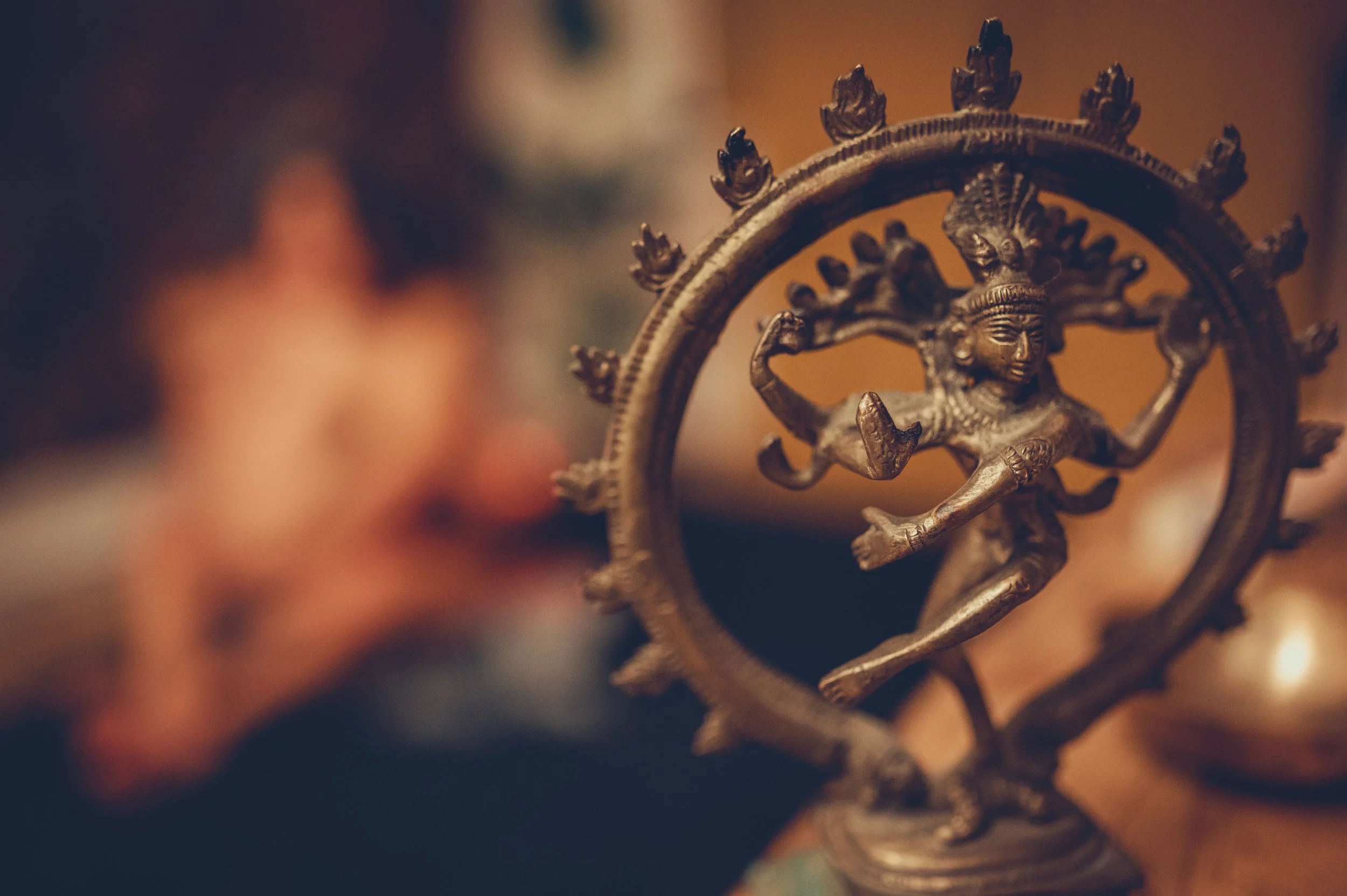
There are times when personal development begins to move beyond the question of what you want to change and towards deeper questions about who you are, how you see yourself and what gives your life meaning.
You may be questioning beliefs or ways of living that once made sense to you, exploring spirituality for the first time, or finding that your existing spiritual practice is opening up new questions. You may simply feel drawn to understand yourself and your experience from a different perspective.
Spirituality isn't something I bring into everyone's work. For some people it isn't relevant at all, while for others it becomes an important part of how they understand themselves, process emotions and make sense of what they're experiencing.
My role isn't to give you a belief system to follow. Instead, we can explore the perspectives and practices that are meaningful to you and consider how they relate to the reality of your everyday life.
Spirituality That Makes Space for Your Humanity
Spiritual development can sometimes become another way of trying to become a better, calmer or more evolved version of ourselves. We can find ourselves judging anger, desire, uncertainty, grief or other very human experiences because they don't fit our idea of what being spiritual should look like.
I'm interested in a different kind of exploration, one that makes space for the whole person.
Spirituality as a Way of Seeing
One of the things I value most about spiritual practice is that it can offer a different framework through which to understand our experience.
Our usual perspective can become very personal: this happened to me; I shouldn't feel this way; I need to change this part of myself; I'll be okay when I've resolved this problem. Spiritual enquiry can sometimes create enough space around those thoughts and emotions for us to relate to them differently.
This doesn't necessarily make difficult experiences disappear. What can change is the perspective from which we meet them.
For some people, this becomes particularly helpful alongside coaching and emotional processing work. We can explore not only what am I feeling? or what should I do?, but also questions such as what am I identifying with here? What am I believing about myself? What happens when I observe this experience rather than immediately becoming caught within it?
Spirituality can therefore become less about finding the right answers and more about developing a different relationship with experience itself.
Non-Duality & the Traditions That Inform My Approach
My own spiritual practice has been shaped particularly by Raja Yoga, Non-Dual Śaiva Tantra and Advaita Vedanta. These traditions have different histories, practices and philosophical perspectives, but each has influenced how I understand awareness, identity and our relationship with experience.
Non-dual traditions invite us to question the assumption that we are simply the thoughts, emotions, roles and stories through which we usually define ourselves. They offer different ways of exploring awareness itself and our experience of separation from ourselves, other people, life or something larger than ourselves.
I don't present these traditions as psychological or scientific explanations, or expect you to adopt their philosophies. Where these perspectives are meaningful to you, they might inform conversation, self-enquiry, meditation or awareness practices. Where they aren't relevant, they don't need to form part of our work.
When Spiritual Experiences Feel Difficult to Understand
Not every spiritual experience feels peaceful, expansive or easy to make sense of. Meditation, yoga, intensive spiritual practice, significant life changes or unexpected embodied experiences can sometimes leave us questioning what is happening or how to integrate it into everyday life.
You may have experienced unusual sensations, spontaneous movement during meditation or yoga, changes in how you perceive yourself, periods of heightened sensitivity, or something you understand through the language of Kundalini or spiritual awakening.
I don't assume there is one explanation for these experiences. We can explore what the experience means to you while also remaining grounded in what is happening in your emotions, relationships, body and everyday life.
Spiritual language can provide a meaningful framework, but it doesn't need to become the explanation for everything. Where something falls outside the scope of coaching or spiritual exploration, I will encourage you to seek appropriate therapeutic or medical support.
This Work May Be for You If...
You may be drawn to this work if you're exploring questions of meaning, identity or spirituality; questioning beliefs or ways of understanding yourself that no longer feel right; developing or deepening a spiritual practice; or trying to integrate spiritual insight into the realities of your everyday life.
You may also be trying to understand an experience that feels difficult to explain, noticing that personal development is leading you towards deeper questions about who you are, or wanting a space where your spiritual perspective can be included rather than treated as separate from the rest of your life.
For some people, spirituality is closely connected with faith or a relationship with God; for others, it may be experienced through meditation, self-enquiry, consciousness, energy, nature or a sense of connection to something larger than themselves. However you understand spirituality, there is space to explore what it means within your own life and experience.
How I Hold This Work
My approach to spiritual development is shaped by more than 30 years of my own practice and enquiry, alongside my professional experience in coaching, somatic practice, emotional and nervous system awareness and yoga. This allows me to hold spiritual questions alongside the psychological, emotional, embodied and practical dimensions of being human.
I don't see spiritual development as separate from ordinary life. Questions about consciousness, identity or meaning can sit alongside careers, relationships, stress, difficult emotions and the practical choices we have to make. Equally, something that initially appears to be a practical or emotional issue can sometimes open into deeper questions about who we are and how we understand our experience.
I don't position myself as a spiritual teacher or someone who has the answers to how another person should live. I welcome people of all faiths and spiritual traditions, as well as those who don't identify with a particular religion or belief system. My role is to create a grounded space in which you can explore what is meaningful to you without being asked to adopt my beliefs or practices.
Sometimes spirituality may be central to our work. Sometimes it may offer a useful perspective at a particular moment. And sometimes it may not be relevant at all.
How This Fits With My Coaching
Spiritual development isn't a separate programme within my practice. It is one of the areas we can explore within my wider coaching and personal development work when it is relevant to you.
This means you don't have to choose between working on your career, relationships, emotions or spiritual development as though they belong to separate parts of your life. A practical decision can raise questions about identity and meaning; an emotional pattern can challenge beliefs about yourself; and spiritual insight can influence how you approach relationships, work and everyday choices.
My whole-person approach allows us to work with these different layers while staying focused on what is actually important to you.
If you're looking for coaching around life, career, purpose, stress or emotional wellbeing, you can learn more about my Coaching. If you're particularly interested in a deeper body-led experience, you may want to explore Somatic Bodywork & De-armouring.
My Relationship with Spirituality
My interest in spirituality began more than 30 years ago. At the time, I was unhappy and looking for a way to understand myself, other people and life more deeply. I began a daily meditation practice, and what started as a search for answers gradually became an important part of how I live.
That practice continues today. I still dedicate several hours most days to meditation, contemplation and spiritual enquiry, alongside breathwork and practices that work with life force energy.
From an early age, I found being human difficult. There were periods when I looked for unhealthy ways to escape, numb myself or avoid what I was feeling. For a long time, my relationship with myself was hard and unforgiving. I struggled with low self-esteem and confidence, questioned myself constantly and didn't particularly like who I was.
Much of my personal development has involved changing that relationship. Through many years of inner work, I gradually moved from relating to myself through criticism and rejection towards greater kindness and acceptance and, eventually, genuinely liking and trusting myself.
Spirituality has been an important part of that journey, but it has also presented its own lessons. There has always been a part of me that finds it easier to move towards what feels transcendent than to stay with the messiness and complexity of ordinary human experience. My continuing practice is therefore not about escaping being human, but learning to be increasingly present within it, grounded in my body and my life while remaining connected to something larger than myself.
My relationship with life has changed over the decades. I have developed a much greater trust in life and in something beyond my individual will. For me, surrender has become less about giving up and more about loosening my need to control everything, something I can now recognise developed very early as a protective strategy.
I don't expect anyone I work with to share my beliefs or use the same language. Spirituality is deeply personal. What my own journey gives me is a genuine understanding of the search for meaning, the desire to know ourselves more deeply and the sometimes difficult task of bringing spiritual insight into the reality of being human.
Music and mantra have long been part of my own meditation and spiritual practice. If you'd like to listen, here is one of the Spotify mantra playlists I use in my own practice.
Further Exploration
If you're curious about some of the traditions and ideas that inform this aspect of my work, my Insights explore spirituality, non-duality, embodiment, Kundalini, yoga and related areas in greater depth.
These articles offer a place to explore the ideas without needing to work with me one-to-one.